A society that won’t defend its most targeted citizens is only defending a restricted version of democracy. Pride Month 2026 forces that distinction into the open.
Chris Kremidas-Courtney
Pride Month is more than just a celebration. It’s also a barometer for democracy, measuring whether a society can tolerate the visibility of people it once pushed into silence, and whether equality is a principle applied to all or only to some. In 2026, the barometer in Europe is unsettled.
In Europe, some states are strengthening protections for LGBTQIA+ equality. In others, the far right is using gender and sexuality as political instruments to demonise and exclude the most vulnerable.
Under Viktor Orbán, Hungary’s anti-LGBTQIA+ politics were part of a wider campaign of authoritarian scapegoating and exclusion. The 2025 law restricting Pride marches and authorising facial recognition against participants was an attack on freedom of assembly and civil society at large. Orbán’s defeat in April 2026 and Péter Magyar’s new government have changed the scene. Hungary is no longer only a warning about how far democratic erosion can go; it is also showing us what democratic restoration demands of those who attempt it. Magyar’s government has moved against parts of Orbán’s institutional legacy, but the laws, habits and narratives left behind do not disappear on election night. They must be actively dismantled.
In the United Kingdom, the danger is being delivered by courts and regulators. The UK Supreme Court ruled in 2025 that ‘sex’ in the Equality Act means biological sex, and the Equality and Human Rights Commission has since issued updated guidance to Parliament.
For transgender, gender diverse and intersex people, the result is an effective segregation from public life implemented by a statutory body, not a parliamentary vote. Meanwhile, the current Labour government was elected on a broadly pro-LGBTQIA+ manifesto but has chosen not to intervene.
The current anti-LGBTQIA+ wave is part of a wider authoritarian campaign that links anti-gender politics, attacks on civil society, misogyny and hostility to migrants into a single ideology; one that decides who belongs and who can be pushed outside the circle of equal protection.
The International Lesbian, Gay, Bisexual, Trans and Intersex Association Europe (ILGA-Europe) publishes an annual Rainbow Map ranking all European states on their legal and policy protections. The 2026 edition shows several EU member states near the bottom of the list, including Italy, Poland, Lithuania, Latvia, Slovakia, Romania and Bulgaria, which still lack basic legal recognition or anti-discrimination protections for LGBTIQ+ people. Spain now tops ILGA-Europe’s rights rankings, yet assaults on LGBTQIA+ people there have tripled in two years, a reminder that legal progress and physical danger can rise simultaneously.
The European Commission’s 2026–2030 LGBTIQ+ Equality Strategy shows a patchwork of progress and regression; while more LGBTIQ+ people across the EU are open about their identity than ever before, hate-motivated harassment has surged by 18% since 2019, with trans, non-binary, gender-diverse and intersex people facing the sharpest rise in physical and sexual violence.
This did not emerge spontaneously. A 2025 report by the European Parliamentary Forum for Sexual and Reproductive Rights found that funding for anti-rights and anti-gender movements across Europe amounted to $1.18 billion between 2019 and 2023, involving a network of 275 actors driving the campaign.
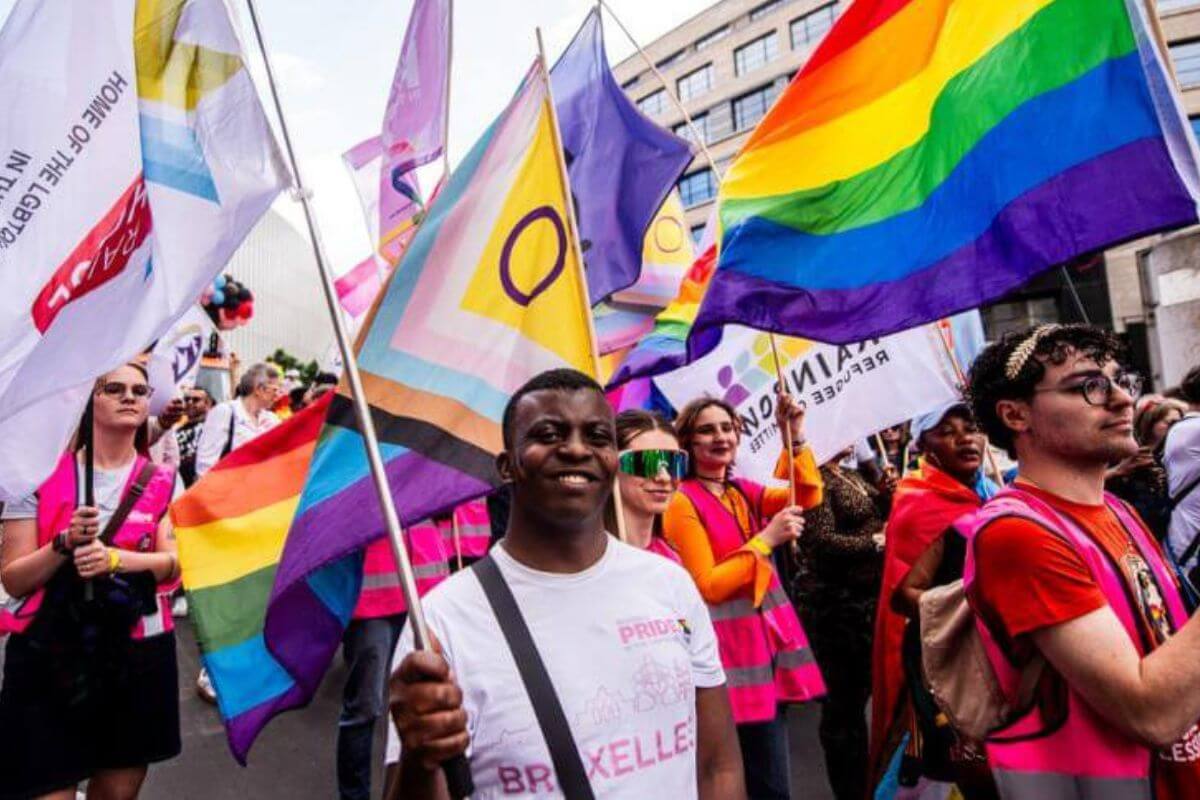
Against this backdrop, a Pride march is not just a parade. It is a refusal to be shamed into invisibility. It is people whom the state, church, far right or mob once tried to shame into silence and invisibility walking openly through the centre of civic life.
When governments ban Pride, they are telling the people that some citizens may exist only in the margins. When regulators make trans inclusion functionally impossible, they create a hierarchy of dignity. And when politicians falsely describe LGBTQIA+ people as a danger to children, they create a permission structure for exclusion.
Europe should recognise this pattern. Since the darkest days of history, persecution has always begun with someone defining an internal enemy – and has rarely ended there. The language changes with each era, but its aim does not.
This is why the defence of LGBTQIA+ rights cannot be left only to LGBTQIA+ people. A democracy that makes minorities defend their own humanity alone is already failing the test. The moral obligation to dismantle the anti-rights narrative must fall on institutions, political leaders, media, educators, civil society and citizens who still have the luxury of being treated as equal. There are real policy questions to discuss within our societies, but there is no democratic obligation to launder dehumanisation as debate.
Pride is a democratic warning system. Its shows us which institutions and leaders will compromise with exclusion and trade someone else’s dignity for a quieter news cycle. It also tells us how far the retreat has already gone.
When a society decides that some people are too controversial to defend, democracy has already begun to erode. And when those people still gather, organise and refuse to disappear, they are doing more than defending themselves. They are defending the democratic values Europe still claims to believe in.
This article originally appeared at the European Policy Centre.