

Britain’s forty-year campaign against a word they invented is a sign of what Americans can expect to be doing themselves one day.
Chris Kremidas-Courtney
Now the 2026 World Cup is over, perhaps now we’ll see fewer exchanges involving English fans correcting an American’s use of the word soccer. And in almost every case, the one being scolded ends up having to remind them they invented the word.
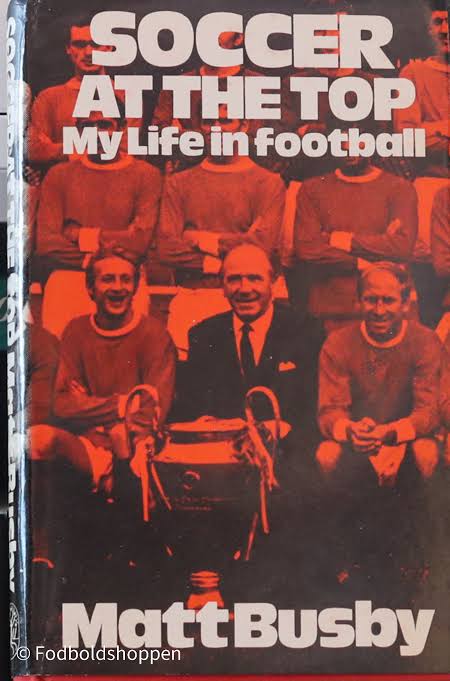
Of course, soccer is a British word, coined at Oxford in the 1880s, when undergraduate slang was turning rugby into “rugger” and breakfast into “brekker.” Association football, the code for association football (as opposed to rugby football) was shortened to “assoc” and then “soccer.” The word remained ordinary British usage for the better part of a century. Matt Busby, himself a football institution, called his autobiography Soccer at the Top while Ray Wilson, the Everton left-back who played on the 1966 World Cup England squad called his “My Life in Soccer.” More recently British television featured shows called Soccer Saturday and Soccer AM. The word only became intolerable in Britain starting in the 1980s, the moment it became associated with America. British print usage of “soccer” collapsed as American usage rose, an arc that historians have traced in detail.
This would be a curiosity of etymology if it were an isolated case, but its not. In the same way Québécois French is to French, American English is a museum of words and sounds that Britain invented, exported, discarded, and then re-encountered as foreign contaminants. Gotten was standard English for centuries. Shakespeare used it, and it survives in Britain as ill-gotten and forgotten before Britain flattened it to got. Fall for autumn, diaper, faucet, trash (used by Shakespeare in Othello), mad for angry, and I guess (used by Chaucer) for I suppose are all older English, preserved across the Atlantic after England moved on. Even pronunciation runs backwards to the popular story. The American flat “a” in bath, and the pronounced “r” in car, are closer to how most eighteenth-century Englishmen spoke than the current received pronunciation is. When someone in London mocks an American accent, they are frequently mocking something nearer their own ancestors’ speech than their own.
So, the interesting question is not linguistic but psychological. Why the amnesia and bitterness? Nobody in Britain gets angry about Australian usage, or about the more dramatic divergences of Indian, Nigerian, or Singaporean English. Those are met with indifference or affection. Only American English is treated as an invasion. The answer is that America displaced the UK as a great power, and it did so during a century they lost so much else.
National identity is built substantially by contrast, and for Britain since 1945 the most available and most threatening contrast has been America; a former colony that became the global hegemon and now exports its films, music, brands, and slang back to the former colonial master at industrial scale, in something recognizably like the source’s own language. When the difference between yourself and the superpower is a handful of vocabulary items and an accent, those items acquire enormous symbolic weight. Every rejected “Americanism” is a small assertion that Britain remains a wellspring rather than a tributary. The intensity of the policing is proportional to the anxiety beneath it.
The amnesia follows almost mechanically. Once a word is coded as American, it becomes psychologically impossible for it to also be “ours”, and so its domestic history is deleted. This is how linguistic purism works everywhere, not just in Britain. The Académie française rails against English intrusions that are often old French vocabulary returning home after centuries abroad. Purists in every language imagine a pristine original that never existed, and forgetting is a way to sustain the fantasy.
There is a class dimension too since many of the abandoned forms were dropped because prestige usage moved on and the older words began to sound provincial. Scoffing at American English is partly a recycled Victorian sneer at older, lower-status British English. The grandparents said soccer and thought nothing of it. But admitting that would expose the absurdity of it all.
Beneath the identity politics of vocabulary lies the loss of an intoxicating kind of power, that of being the default.
For roughly a century, Great Britain was not merely powerful; it was the zero point from which the world was measured. Time itself begins in Greenwich, and the prime meridian runs through London by international agreement. The world’s trade was priced in sterling and its shipping insured by Lloyd’s. British stamps carry no country name because when Britain invented the postage stamp, there was no one else to be confused with.
Default status is a peculiar kind of power because its invisible to its holder. You don’t experience yourself as one country among many but rather the norm from which others deviate. Everyone else has an accent while you simply speak. Everyone else has odd customs while you simply live “normally.”
This is why losing default status can feel like the world gone wrong, as if the furniture had been rearranged during the night. There is no feat or match that restores you from being a country to being the country.
What remains is a phantom-limb sensation, and it aches most when it comes to language which was Great Britain’s main export. The trouble is that parentage is not ownership and the children now run the estate. English succeeded globally so completely that it stopped belonging to anyone. Instead of a total victory, Britain experiences it as a dispossession.
Greeks experience the same feeling every time a new film based on its antiquity is released; even its own past is not under its control since ancient Greece is seen as a shared Western inheritance.
America has inherited both the position and the blindness. Much like the default nations of the past, Americans say “the world” when they mean the United States, assume the planet follows their events, and are faintly startled when other nations have their own cultural landscapes. When American centrality eventually erodes, the same symptoms can be expected in nostalgia, custodianship, and irritation at upstarts using “their” things wrongly.
When you can no longer set the terms of the present, you appoint yourself curator of the past. Curation is what people choose when they want to stop the clock, turning the past into an asset to administer. It’s no accident that the great age of museum-building coincided with empires either at their peak, or just past it.
And curation carries with it a certain aggression. The curator does not merely preserve, they authenticate. They decide what counts as the real version of what they choose; real football, real English, real carbonara, real democracy and everyone else’s evolving versions are labelled as derivative or corrupt.
It’s a way of losing the present while claiming retroactive jurisdiction over it. You cannot stop people doing the thing you are trying to police; you can only insist they are doing it wrong. France legislates for its language and Greece for its classical heritage. Italy polices a “traditional” cuisine much of which is younger than the Beatles. Meanwhile, Britain corrects others using their own word “soccer.”
Heritage can confer soft power, tourism revenue, and even diplomatic gravitas. But it can also locks a society into a backward-looking posture in which innovation is more of a threat than an opportunity, and the past appreciates as an asset only so long as the present keeps referencing it. Unfortunately, the present is under no obligation to do so.
The pattern is not confined to nations. Companies that stop innovating start to litigate their way out of losing market share. Fender’s recent legal action over the shape of the Stratocaster guitar is a case in point. Institutions that stop producing new knowledge too often start gatekeeping standards instead of innovating.
None of this makes the ordinary Briton grumbling about language a tragic figure. Most it is a ritual grievance on the order of complaining about the weather. But each small correction re-enacts a claim they can’t say openly; that the game, language, and status as the default center are still theirs. The word soccer was born in Oxford, lived a long and respectable English life, and was disowned only when Americans adopted it. But the word’s exile is not about the word itself.
It’s about the cultural pain that comes from losing the status of being the place from which time began, where the language was set, where the game was written down. It’s the ache of finding yourself simply another country among many.
Americans should study that shift carefully, because their turn is coming. They hold the default position now with a dominant culture, the dollar as the main global reserve currency, and their inventions as the norm from which others deviate. And just like the default powers of the past, few Americans realize its a temporary status.
When the present begins to slip from their grasp, the symptoms will be the same. They will insist that the “real” internet and cinema, “real” rock and roll, jazz, and blues are theirs, and that whatever the rising powers are doing is a knockoff. They will forget how much of their own culture was imported and remixed because an identity under threat cannot afford mixed parentage. They will feel what Britain feels now; total cultural victory experienced as a great loss.


