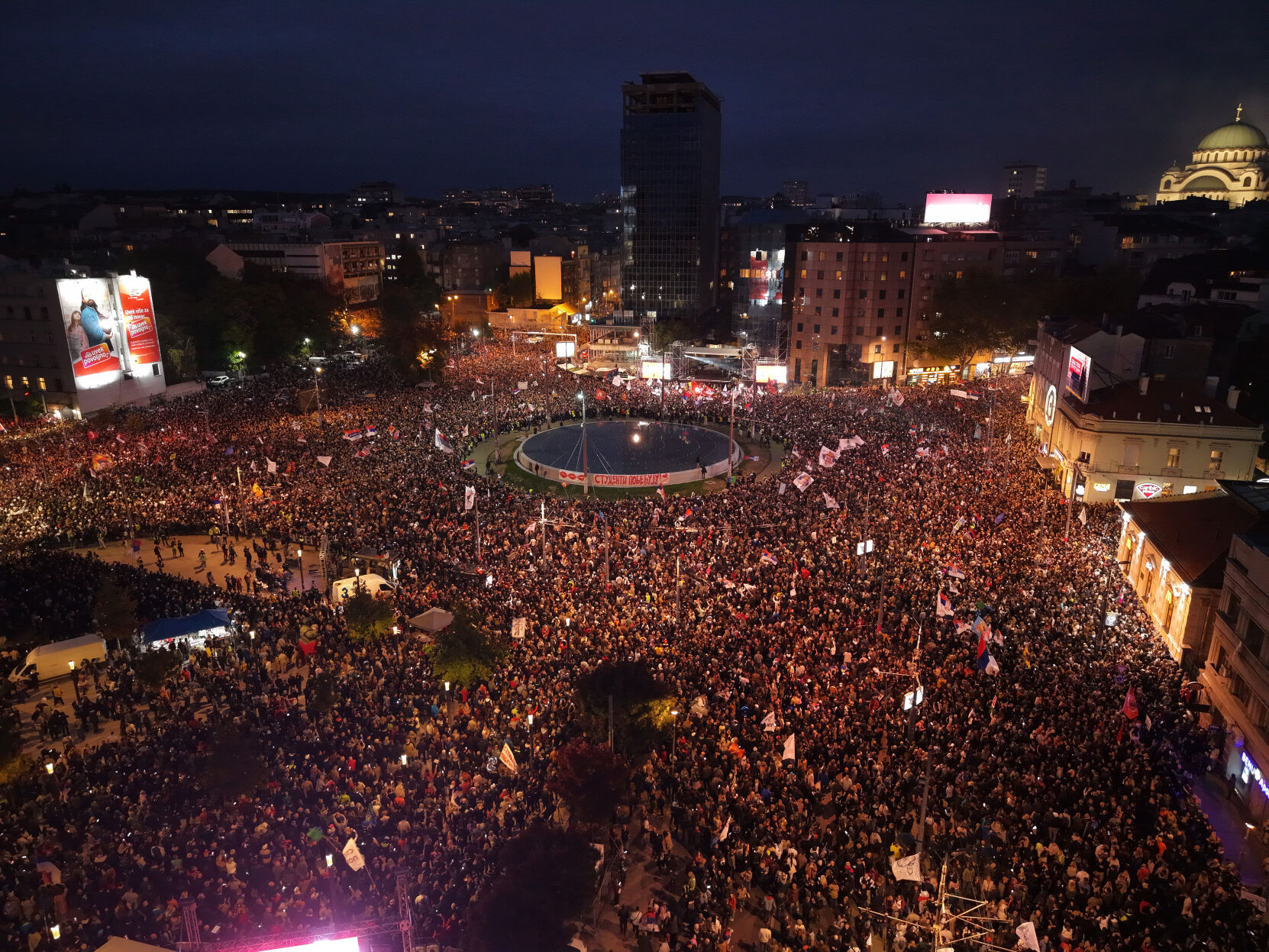
Serbia’s EXIT festival helped turn public anger into solidarity and gave the student movement a wider cultural reach. Its story offers lessons for democratic renewal across Europe.
Chris Kremidas-Courtney
The defeat of Aleksandar Vučić in Serbia’s parliamentary election is being celebrated as a victory for a student movement that refused to give up. Its origins lie in the deaths of 16 people when the canopy of Novi Sad’s railway station collapsed in November 2024, unleashing public anger about corruption and government accountability. Another part of this story that deserves attention is the music festival that carried the students’ struggle into Serbia’s broader cultural life.
EXIT began in 2000 as 100 days of student-organised concerts and political activism against Slobodan Milošević. The festival was named for a generation’s determination to exit a decade marked by war and repression. That autumn, Milošević fell while EXIT grew into an international festival that introduced the world to a new face of Serbia.
Twenty-five years later, another generation of Serbian students took to the streets demanding answers on the railway station disaster and challenging a political system that allowed corruption to flourish. When EXIT’s organisers publicly supported the students, the festival became part of the wider contest over who could speak freely in Serbia. This also put a target on the event’s back.
By June 2025, Serbian authorities withdrew public funding and had reportedly pressured sponsors to pull out, leading organisers to announce it would be the last time the event could be held inside the country. Serbian authorities claimed the funding decisions were due to financial constraints, but the public saw it as political retaliation for supporting the students.
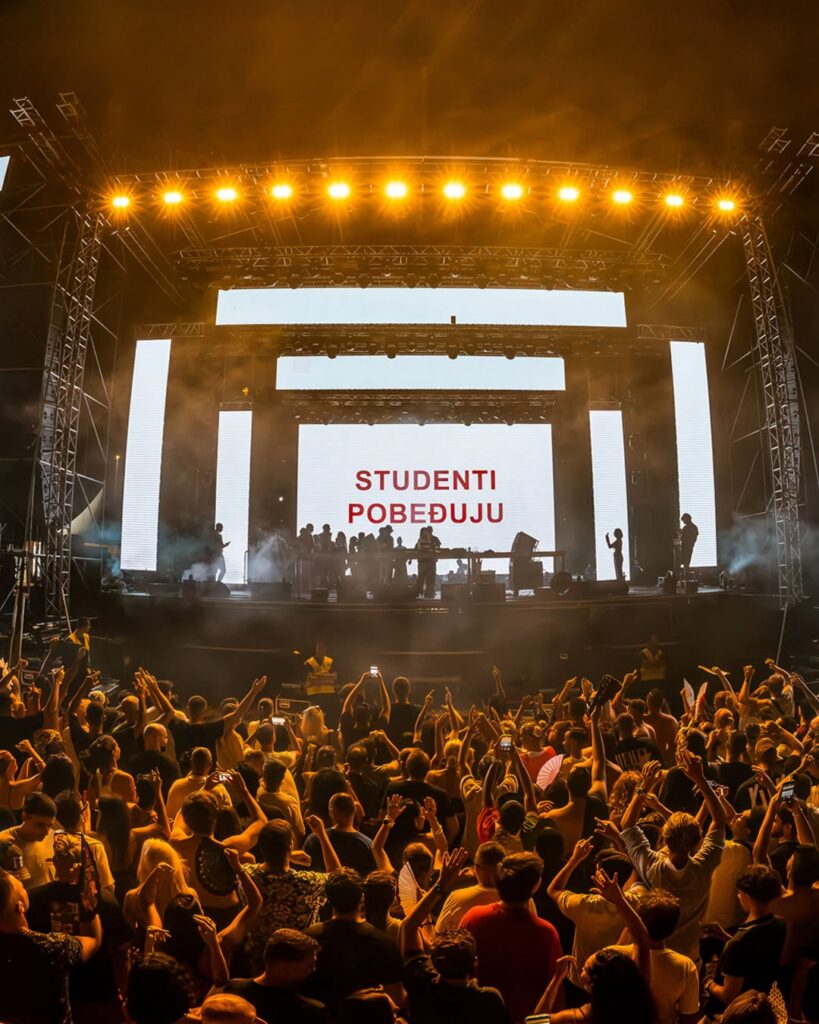
At the festival that July, 40,000 people stood silent for 16 minutes, one minute for each person killed at the station in 2024. Students walked onto the main stage where Italian singer Gala joined them to perform her 1996 hit “Freed from Desire,” a song which became the protesters’ unofficial anthem. These moments gave the movement a broader cultural appeal that spread well beyond Serbia’s youth.
While EXIT’s role as a catalyst for Serbia’s political transformation is difficult to measure, its ability to extend the movement’s cultural reach was striking.
Culture has this power since it belongs to every person who sees it as their own. Music concerts bond people through shared experiences and can imbue them with a common sense of possibility. A young person may hesitate to attend a political rally but at EXIT they found themselves standing with thousands of others, realizing they are not alone in their concerns.
Of course, Serbia’s student movement is broader than a music festival, and its dogged persistence came from students and citizens who continued to organise through many difficult months. Cultural solidarity developed within that larger struggle as well.
With the student-backed list’s defeat of Vučić’s party in the recent parliamentary election, EXIT has now come full circle. A festival born of students challenging Milošević found itself, 25 years later, allied with students who ousted the man who had been his information minister when it began.
The success of EXIT demonstrates that culture can unite people across generations and political divides, transform public anger into shared purpose and let people discover how many others stand beside them.
Vučić’s government recognized EXIT’s power well enough to cut its funding and try to drive it out of Serbia. Pro-democracy parties should grasp this as well. The critical lesson is that such cultural movements grow organically through artists and communities whose independence gives them credibility. Democratic leaders must learn to recognise these movements when they emerge, protect their independence, and amplify their voices. Any attempt to manufacture or appropriate their energy risks destroying the authenticity that makes them powerful in the first place.
Serbia’s students have given hope to people around the world who’ve seen their democratic freedoms erode and wondered whether the tide could ever turn. Their victory reminds us that ordinary people united by a common purpose can still change the course of history.
And sometimes democratic revival finds its voice through culture before it finds its way to the ballot box.